Skincare Education Series
Through our education series, we will help explain the science that goes into formulation our skincare and suncare products to help you better understand why we developed them, what are the benefits, and which type of product is best for your skin.
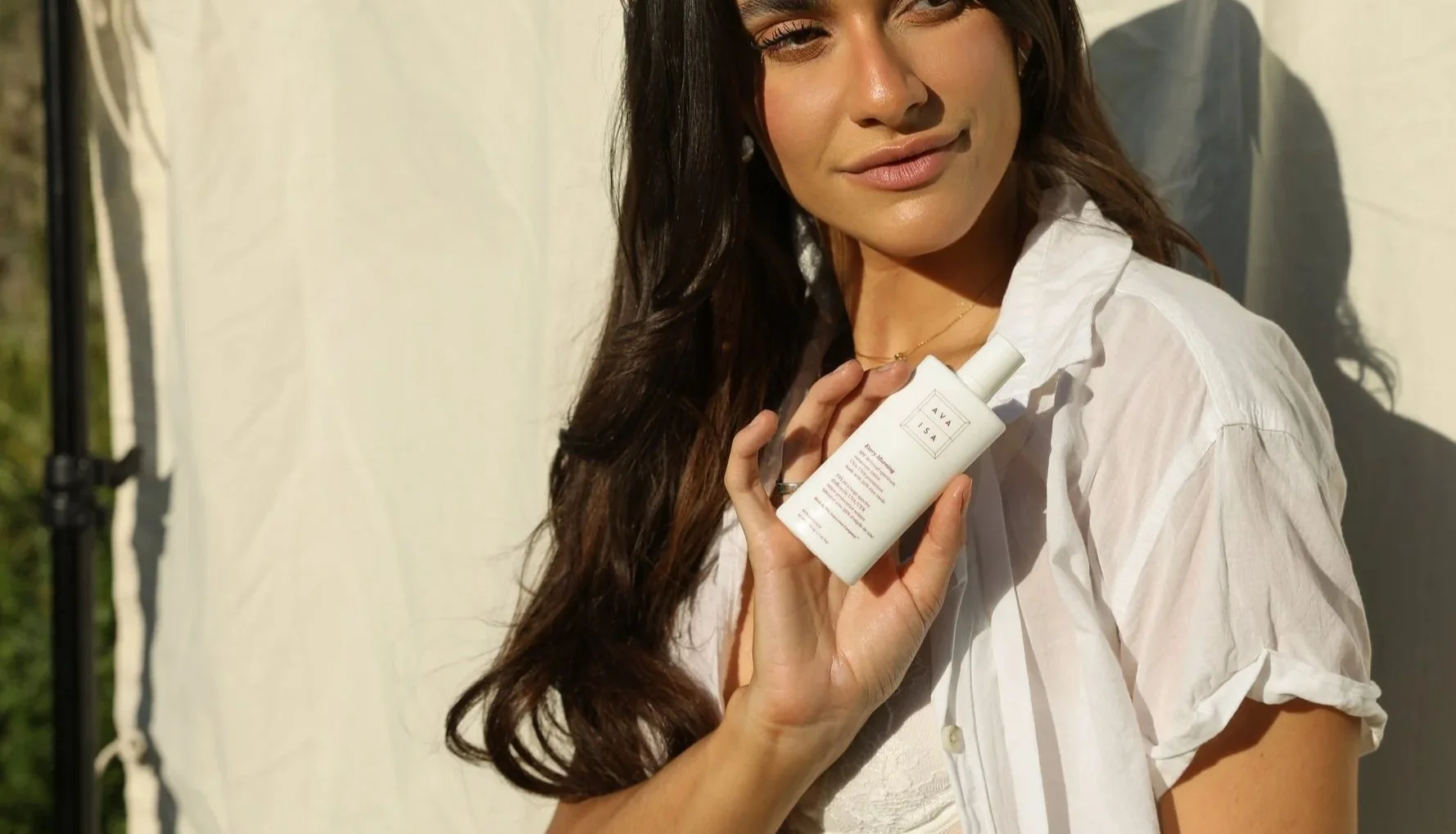
Mineral vs Chemical Sunscreens:
Definitions
The Myths
The science
& More Questions Answered
You Asked, We Answered
Sunscreen is the #1 investment you can make in the health of your skin. Shopping for a sunscreen on-line is hard because it can be confusing and difficult to determine what is true with so much information on the internet. We have put together this guide to mineral vs chemical sunscreens to help dispel some popular myths, better explain what this means, and help educate you with honest scientifically-supported information on this hotly debated topic.
THE DEFINITIONS
What is A Chemical Sunscreen?
A chemical sunscreen is a sunscreen that uses organic UV filters (often called chemical filters) to protect the skin from ultraviolet (UV) radiation. These filters work by absorbing UV energy and converting it into a small amount of heat, which is then released from the skin.
Common chemical UV filters include:
Avobenzone
Octocrylene
Octisalate
Homosalate
Octinoxate (Ethylhexyl Methoxycinnamate)
Uvinul A Plus (Diethylamino Hydroxybenzoyl Hexyl Benzoate)
Uvinul T 150 (Ethylhexyl Triazone)
Tinosorb S (Bis-Ethylhexyloxyphenol Methoxyphenyl Triazine)
Tinosorb M (Methylene Bis-Benzotriazolyl Tetramethylbutylphenol)
What Is a Mineral Sunscreen?
A mineral sunscreen is a sunscreen that uses inorganic UV filters, primarily zinc oxide and/or titanium dioxide, to protect the skin from ultraviolet (UV) radiation. These mineral filters work by absorbing UV energy and converting it into a small amount of heat, while also reflecting and scattering a portion of incoming UV radiation.
Mineral sunscreens are typically:
Broad-spectrum when formulated with zinc oxide
Gentle and well-tolerated by sensitive skin
Less likely to cause irritation compared to some chemical filters
Often recommended for children and individuals with reactive skin
Available in both traditional formulations and newer options designed to minimize white cast
The two approved mineral UV filters used in modern sunscreens are:
Zinc Oxide
Titanium Dioxide
The Science
The words “natural” versus “chemical” are used deceptively to imply that some sunscreens are not chemicals, and that a natural or mineral product might be preferable because it acts as a physical barrier that bends or reflects light compared to chemical sunscreens that absorb light. All sunscreens are chemicals - it is fundamental Chemistry. A chemical is a substance in any form : ionic, molecular, organic or inorganic - that is generated by or utilized in a chemical process. Some are organic - meaning carbon based with complex carbon chains and rings in their structure. Mineral UV filters are inorganic compounds (contain no carbon atoms) like zinc oxide, titanium dioxide, iron oxide, and others. Their individual atoms all occur on the Table of Chemical Elements.
The labels physical and chemical as applied to sunscreens are inappropriate (Professor N. Kollias, Archives in Dermatology, Feb 1999). Minerals like titanium dioxide (TiO2), zinc oxide (ZnO), and others, remain as particles in a sunscreen because of low solubility. These substances are ‘physical’ since they have a predetermined particulate size but are chemicals by any definition. Even soluble organic filters will form physical crystals as the carrier base evaporates. Consumers are blitzed with the fallacy that “natural” (mineral) filters reflect or bend light like a barrier- whereas the so-called chemical agents absorb light in a chemical reaction.
Do mineral sunscreens ever ‘block’ or reflect light?
Photoprotection from scattering or reflection of light occurs only if a very thick optical barrier prevents light from passing through to the skin, similar to a thick coat of paint not seen in commercially available sunscreens. This would not be acceptable to any consumer. A thicker mineral based make-up will achieve some reflection or a “barrier” effect but all sunscreens absorb photons of light in reducing sun damage. Modern mineral sunscreens using smaller particles – micronised or nanoscale – only reflect or back scatter 5% of the UV light passing through the sunscreen.
New and more efficient micronized and/or nanosized mineral filters only scatter < 10% of incident light. Even older pigment grade forms of zinc oxide and titanium dioxide with larger molecules over 1 micron in size did not reflect more than 15% of the UV rays. All mineral or insoluble UV filters act as semi-conductors and absorb photons with electron shifts to a different valence band, so a harmful wavelength is converted to a less harmful or innocuous wavelength.
What should we call ‘chemical’ sunscreens then to differentiate them and is there an issue with their safety?
The word chemical is a misnomer as ALL UV FILTERS ARE CHEMICALS. Our product developers and expert panel at Cyberder avoid formulating with small Molecular Weight soluble organic filters that reach blood and tissue. Organic does not mean natural or safe – only carbon based in the chemistry sense of the word. Many of these synthetic filters contain the 6-carbon benzene ring so inimical to humans and the environment. The mineral filters zinc oxide and titanium dioxide are still chemicals- albeit inorganic ones made by a geologic system (ie. Mother Earth) - hence the tendency to think of them as natural. Mineral filters are now so processed, highly refined, milled, doped and coated that although they are really “naturally derived” they are so altered that they are semi-synthetic.
With these facts in mind, the only accurate classification of UV filters is soluble versus insoluble and definitely not natural versus chemical. Both types mostly act by absorbing photons. The mechanism of action in mineral UV filters involves the use of photon energy to excite electrons. For example, rutile TiO2, has a band gap energy of 3.06 eV corresponding to a wavelength of 412.5 nm. Light at or below this wavelength will have enough energy to excite electrons from the valence band to the conduction band. Any photon with a wavelength longer than the band gap will not be absorbed by the sunscreen. Each substance has its unique semiconductor properties and band gap, accounting for the filtering activity at different wavelengths. This means that specific UV filters will only work against certain types of UV light. Zinc oxide remains the only mineral filter that adequately absorbs UV light through both the UVB and UVA wavelengths. Titanium dioxide absorbs UV light mostly in the UVB range and somewhat in the short wave UVA range depending on particle size. Most soluble organic filters in the US absorb UV light in the UVB range with the exception of Avobenzone that filters long wave UVA.
Myths
Myth 1: Zinc Oxide Can Never Be Transparent
You’ve probably seen influencers posting videos of zinc oxide as a stark white powder, claiming that mineral sunscreens can never be transparent. But just because zinc oxide starts as a white powder doesn’t mean it has to stay that way on skin.
Modern sunscreen formulation has come a long way. Instead of simply mixing in raw zinc oxide powders (a method that often leads to thick, chalky formulas), today’s cosmetic chemists use zinc oxide dispersions—liquid suspensions designed to stabilize and evenly distribute particles. These dispersions can even be matched with carrier fluids that bend light in a way that makes the particles look invisible on skin.
The result? Mineral sunscreens that are elegant, lightweight, and transparent—no white cast required.
Our Ava Isa Sun-è-Serum Drops SPF 35 and Ava Isa Every Morning Sunscreens are a great examples of transparent zinc oxide formulations. Our new Ava Isa Every Morning SPF 30 dries transparent after rubbing it in, and only requires slightly more blending than our Sun-è-Serum Drops SPF 35. Both are great options if you need maximum protection with good transparency on all skin tones.
👉 Related reading: How to Choose a Mineral Sunscreen with no White Cast
Myth 2: Only Tinted Sunscreens Help with Melasma and Pigmentation
It’s true that visible light and free radicals contribute to pigmentation issues like melasma. Iron oxides (the pigments used in tinted sunscreens) can help improve visible light protection. But here’s the catch: zinc oxide is already one of the most effective UV filters for coverage in the visible light range.
The popular study that sparked the “tinted sunscreen only” trend used zinc oxide as the base UV filter, then compared versions with added iron oxides. What it failed to clarify was how much visible light protection the zinc oxide-only formula already provided.
Here’s the science-backed reality:
Zinc oxide is the best UV filter for visible light protection.
MBBT is another strong option, while avobenzone offers very little protection in this range.
Iron oxides enhance coverage, but they’re not enough on their own.
That’s why we recommend applying a high-concentration zinc oxide sunscreen first (our formulas use the maximum 25% zinc oxide), and then layering tinted makeup or mineral powder with iron oxides on top for optimal protection.
👉 Shop: Our High-Zinc Mineral Sunscreens
Myth 3: SPF 50 is Always Better Than SPF 30
Many people dismiss SPF 30 mineral sunscreens, assuming only SPF 50 offers real protection. But the truth is more complicated.
First, not all sunscreens actually meet their labeled SPF. Studies show that results can vary by 30–50% between labs, meaning one formula might test as SPF 50 in one lab and SPF 35 in another—and both results would be considered acceptable.
Second, SPF only measures protection against UVB rays (the ones that cause sunburn), not UVA rays, which penetrate deeper and contribute to long-term damage and skin aging. Many high-SPF sunscreens are UVB-biased, protecting against burns but offering poor UVA coverage.
Our testing shows that while many North American sunscreens have a UVA Protection Factor (UVA-PF) of just 5–8, our mineral sunscreens deliver UVA-PFs of 12–15. That’s protection you can count on—whether the label says SPF 30 or SPF 50.
Bottom line: Don’t choose your sunscreen by SPF alone. Look for formulas with strong UVA protection, especially high-zinc mineral sunscreens.
👉 Learn more: What ingredients SHOULD be in your sunscreen
Myth 4: Newer Formulations Can Use Less Zinc Oxide
Some brands claim that coatings, dispersions, or “Super-Zinc” technologies mean you can get the same protection with less zinc oxide. But concentration still matters.
We use a simple rule of thumb:
Estimated SPF = % zinc oxide × 2
Estimated UVA-PF = % zinc oxide ÷ 2
Our research shows many sunscreens claim far higher SPFs than their zinc oxide content would suggest—often by adding SPF boosters or redness-reducing ingredients like niacinamide, aloe, or bisabolol. While these make formulas look good in testing, they don’t provide the same true UV absorption.
That’s why we stick to over 20% zinc oxide in every formula. It’s harder to formulate, but it ensures reliable broad-spectrum protection.
👉 Read our full industry report on the role of chemical SPF boosters in Mineral sunscreens
Myth 5: Next-Gen Chemical Filters Are Always Superior
Korean and European sunscreens are often praised for using “next-gen” UV filters not available in North America. While some of these filters (like MBBT or BEMT) are excellent, not all are created equal—and many still lack the FDA’s GRASE designation (Generally Recognized as Safe and Effective).
By contrast, zinc oxide and titanium dioxide remain the only UV filters officially recognized as safe and effective by the FDA. Zinc oxide, in particular, provides unmatched broad-spectrum protection, is non-irritating, and does not absorb into the body.
Innovation is exciting, but zinc oxide has been continually refined for decades. Today’s zinc oxide mineral sunscreensare elegant, effective, and proven safe—making them a world-class choice for daily protection.
👉 Explore: How do Korean sunscreens compare against Mineral ones for the prevention of pigment
Are newer Chemical Filters Better Than Zinc Oxide Now?
Korean and European sunscreens are often praised for using “next-gen” UV filters not available in North America. While some of these filters (like MBBT or BEMT) are excellent, not all are created equal—and many still lack the FDA’s GRASE designation (Generally Recognized as Safe and Effective).
By contrast, zinc oxide and titanium dioxide remain the only UV filters officially recognized as safe and effective by the FDA. Zinc oxide, in particular, provides unmatched broad-spectrum protection, is non-irritating, and does not absorb into the body.
Innovation is exciting, but zinc oxide has been continually refined for decades. Today’s zinc oxide mineral sunscreens are elegant, effective, and proven safe—making them a world-class choice for daily protection.
The Bottom Line
When it comes to sun protection, mineral sunscreens with high concentrations of zinc oxide remain the gold standard for broad-spectrum coverage, visible light protection, and skin tolerance.
Don’t fall for internet myths—look past SPF numbers, white-cast rumors, or marketing jargon. A well-formulated mineral sunscreen is not just safe and effective; it’s one of the most powerful tools you have to protect your skin from UV damage and premature aging.
Final Takeaway
Don’t be swayed by internet myths. The truth is clear:
✅ Mineral sunscreens with high zinc oxide provide the best broad-spectrum protection.
✅ SPF numbers alone don’t tell the full story—UVA coverage matters most.
✅ Today’s formulations are transparent, safe, and effective for all skin types.
By choosing a zinc oxide mineral sunscreen, you’re protecting your skin from sunburn, premature aging, and long-term UV damage—safely and reliably.
👉 Shop: Our High-Zinc Mineral Sunscreens